
SIG Meeting Guide: How to Participate and Organize in the openUBMC Community
新手指引
2025/07/17openUBMC小助手
SIG Meeting Guide: How to Participate and Organize in the openUBMC Community
The openUBMC open source community uses Special Interest Groups (SIGs) to manage development tasks and releases. SIGs hold regular meetings for technical review, task management, and design discussions. This guide helps developers join meetings and assists core members in organizing them effectively.
Meeting Format and Platforms
openUBMC community meetings are held online to support global participation.
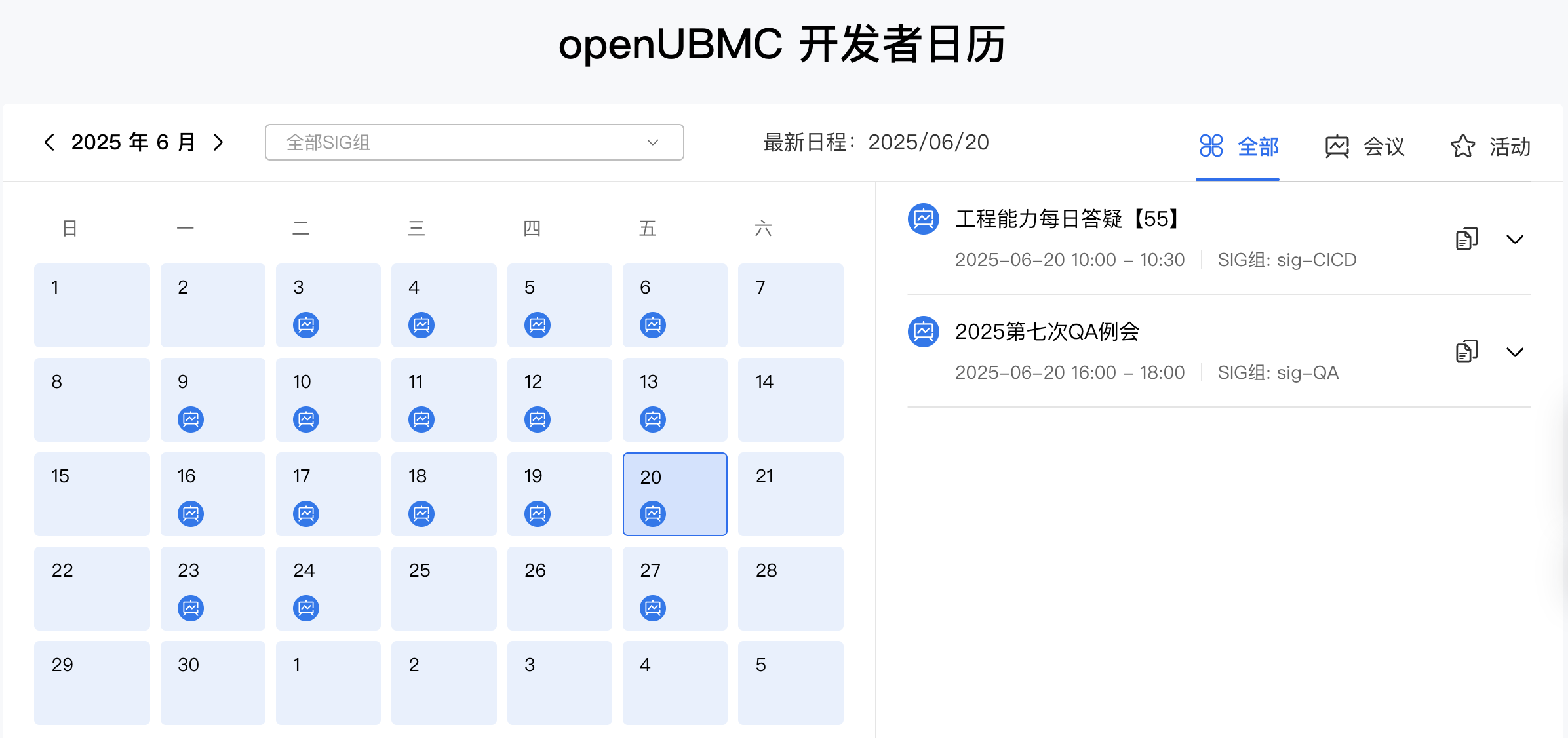
- Developer Calendar: You can view all scheduled meetings on the openUBMC Developer Calendar, accessible via the community portal website.
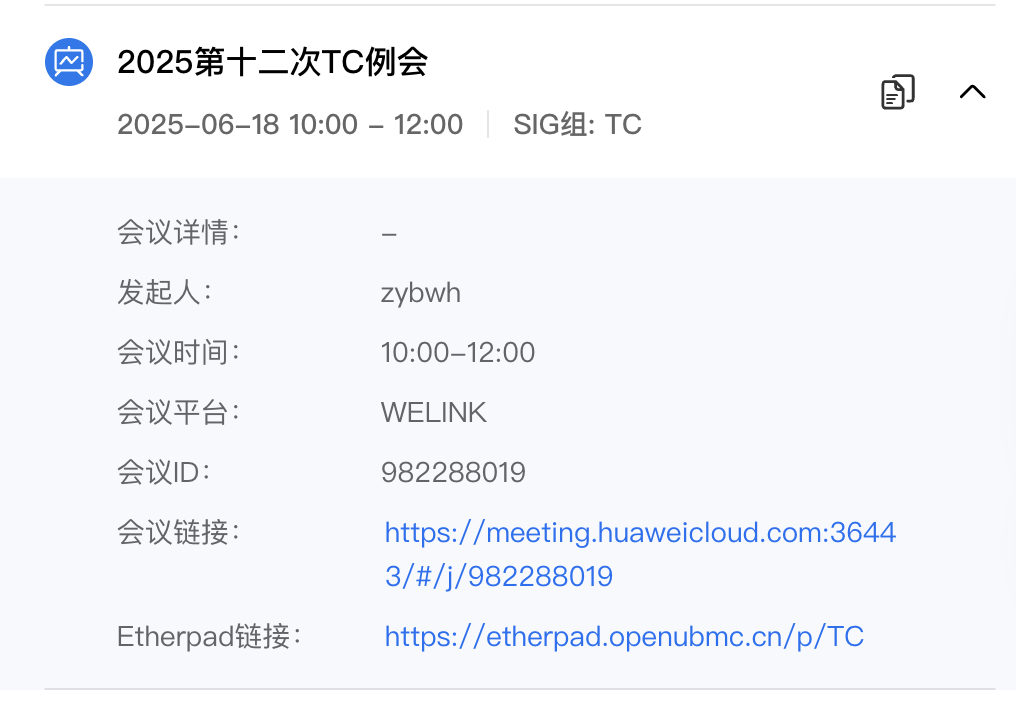
- Platforms: Meetings typically use platforms like WeLink or Tencent Meeting. Please download and install the required software in advance.
The Role of Etherpad
The openUBMC community uses Etherpad for registering topics, recording content, and finalizing meeting minutes.
- Access: Every SIG has a permanent Etherpad link, found on the SIGs page or in the meeting notification.
- Editing: Log in with your community account to start editing and adding discussion topics.
- Maintenance: SIG maintainers and committers are responsible for maintaining the content and format of their SIG's Etherpad. Refer to the community's Etherpad Template for guidance.
Meeting Subscription
When a new meeting is created, a notification is sent via the SIG's mailing list. To receive these notifications, you must subscribe.
- Go to the community email management page.
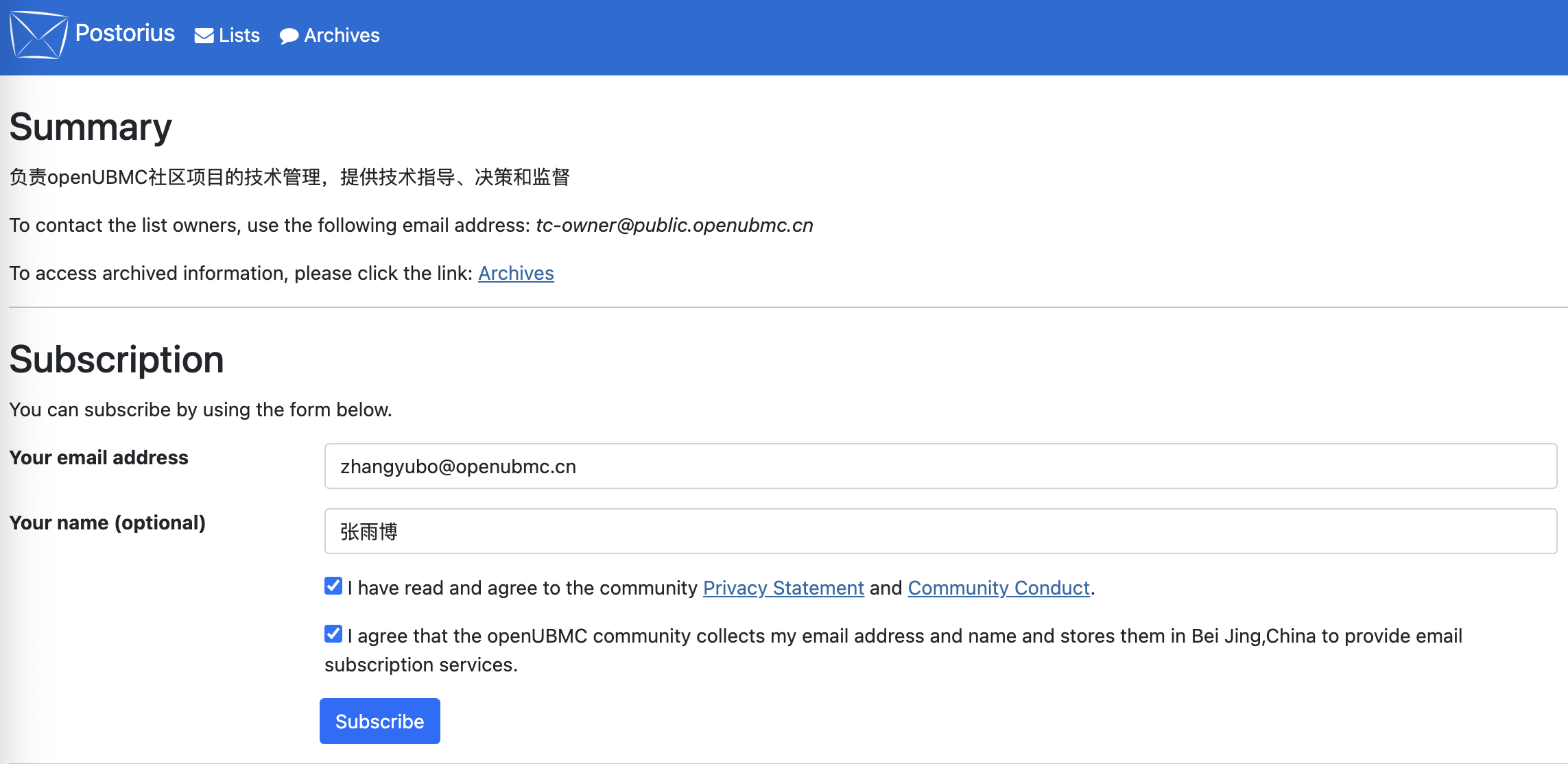
- Select the desired SIG mailing list. Enter your email address and click Subscribe.
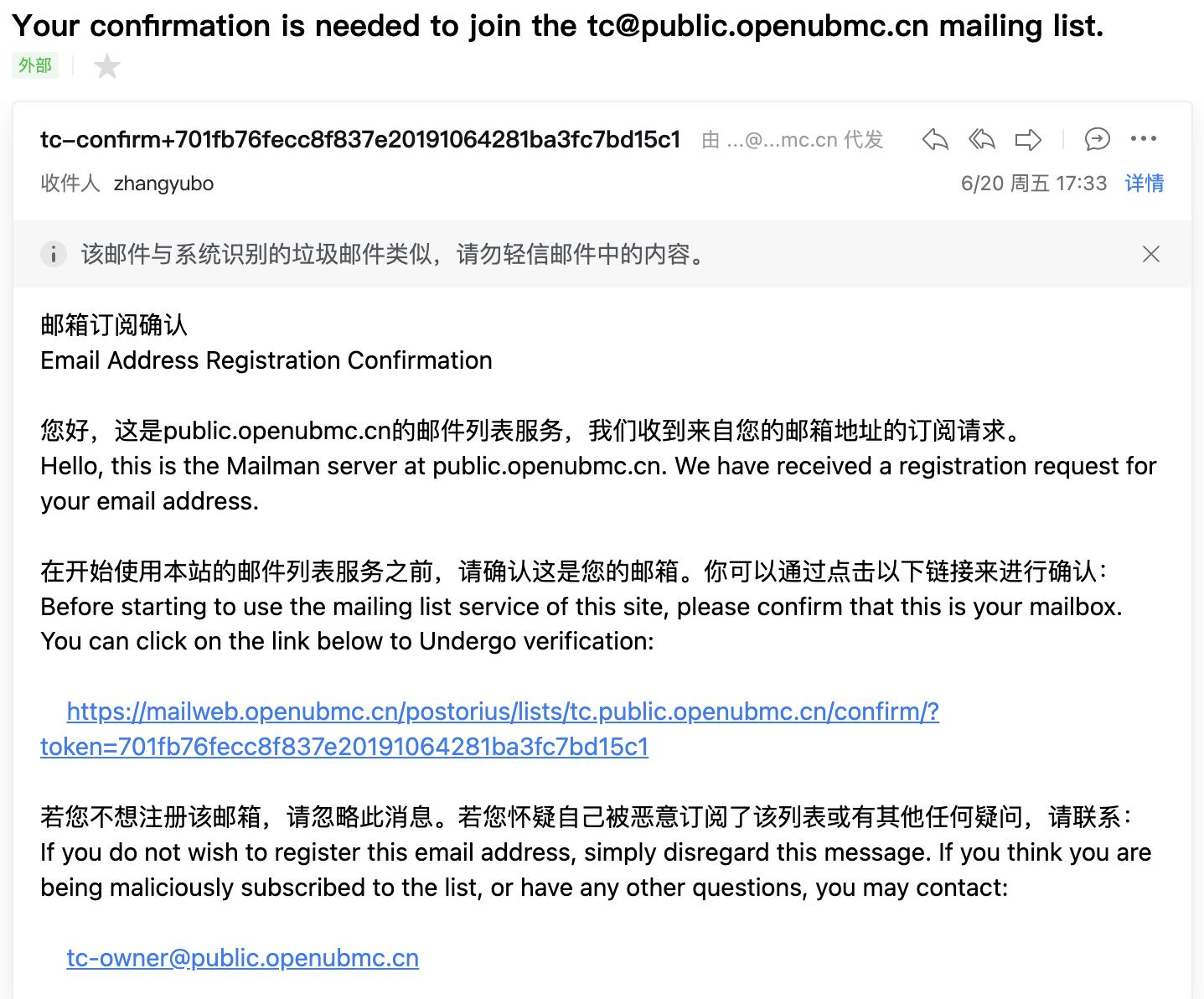
- Check your inbox, click the confirmation link, and confirm your subscription.
Meeting Management
SIG maintainers and committers have the authority to reserve community meeting resources.

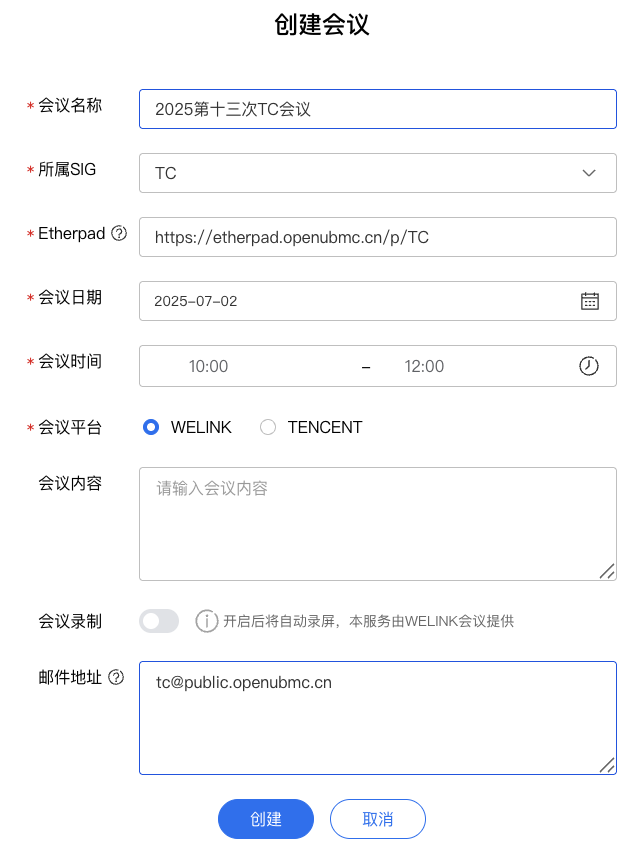
- Go to the Personal Center and click Create Meeting.
- Select the target SIG and fill in the required meeting information.
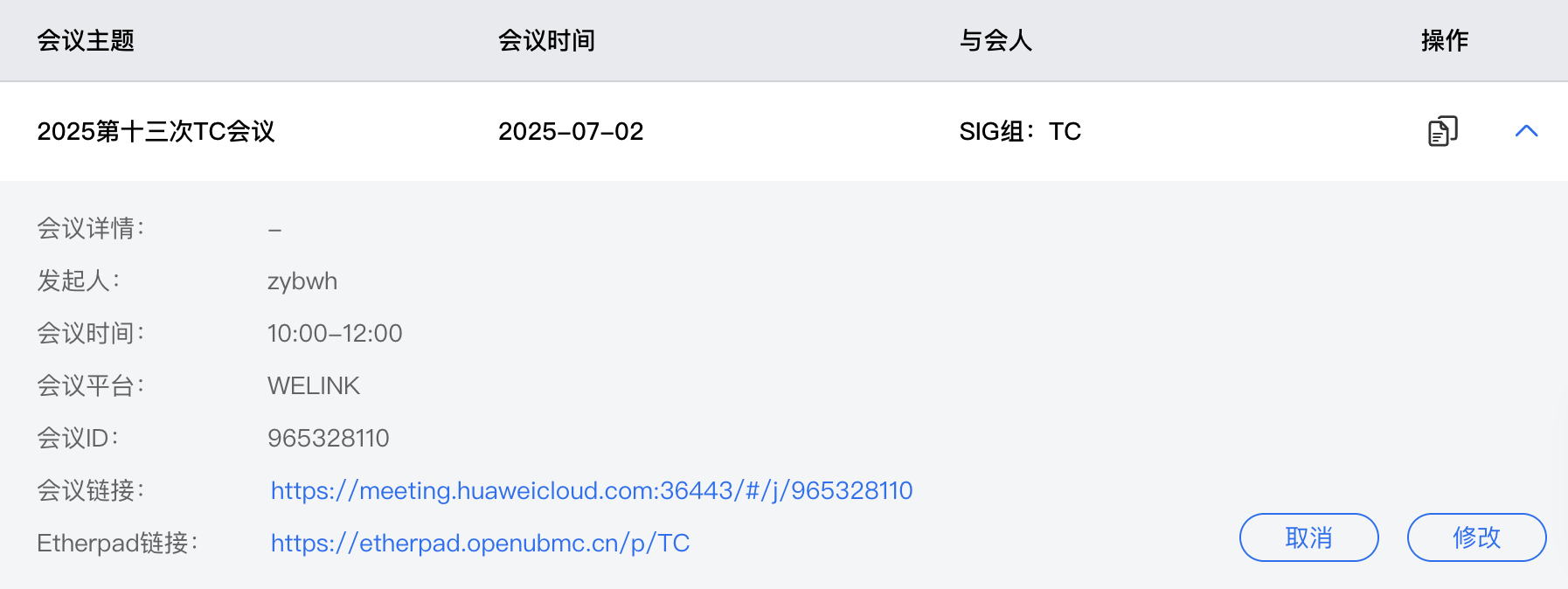
Once created, the meeting details will be visible on Developer Calendar.
Tips for Highly Effective Meetings
For productive SIG meetings, follow these best practices:
Preparation: Define Goals and Agenda
- Categorize topics
Define the category for each topic. Decision-making topics and discussion topics require different approaches, helping organizers manage time. - Pre-meeting consensus (decisions)
For decision-making topics, collect feedback from key SIG members (via issues and forums) before the meeting. Clearly state what needs to be decided to avoid long, rambling discussions. - Pre-meeting context (discussions)
For discussion topics, share background material (design docs and issue links) in advance. State the discussion goal clearly and collect opinions from core members beforehand. - Publish agenda early
Set a fixed, periodic schedule. Send the meeting notice one week in advance to allow attendees to plan. Confirm the final agenda one day prior to avoid discussing irrelevant topics. - Encouraging asynchronous preparations
Encourage members to discuss issues, pull requests (PRs), or proposals in issues, PRs, or the forum first. The meeting should not be a "read-the-document" session.
Execution: Efficient Collaboration and Record Keeping
- Strictly follow the agenda & time: Appoint a moderator to control the pace and prevent tangents. Use timeboxing to limit discussion time for each topic.
- Prioritize real-time discussion: Solve issues that can be handled through issues, PRs, email, or the forum asynchronously. Reserve synchronous meeting time for critical decisions or complex real-time problem-solving.
- Ensure transparency & inclusivity: All SIG discussions must be public. Anyone should be allowed to offer input. Record complex discussions in the Etherpad so non-attendees can still understand the process.
- Clear decision mechanism:
- Adopt lazy consensus: A proposal passes by default unless there is a strong objection.
- Use voting for major decisions: Major decisions require a formal voting mechanism (forum/email polls), and the outcome must be recorded in the meeting minutes.
Key Principles
- ✅ Open & transparent: All discussions and decisions are public and auditable. Avoid private decisions.
- ✅ Inclusive & collaborative: Encourage new members to participate. Prevent core members from dominating the discussion.
- ✅ Results-oriented: Every meeting must have clear output (a decision, a task, or a document).
- ✅ Respect time: Start and end on time. Avoid pointless discussion.
【版权声明】Copyright © 2026 openUBMC Community。本文由openUBMC社区首发,欢迎遵照CC-BY-SA 4.0协议规定转载。转载时敬请在正文注明并保留原文链接和作者信息。
【免责声明】本文仅代表作者本人观点,与本网站无关。本网站对文中陈述、观点判断保持中立,不对所包含内容的准确性、可靠性或完整性提供任何明示或暗示的保证。本文仅供读者参考,由此产生的所有法律责任均由读者本人承担。