
openUBMC Observability: Full Insight into the System for a New BMC Vision
As digital transformation surges forward, system complexities escalate continuously. The efficient monitoring and management of distributed systems have become a key challenge. As a bridge between hardware and software, the baseboard management controller (BMC) is responsible for device management, monitoring, and maintenance. openUBMC 25.06 introduces the Observability component to provide complete observability capabilities based on openTelemetry, enabling developers to clearly understand system status, quickly locate issues, and optimize system performance.
This article explores the advantages, value, and prospects of openUBMC Observability. We look forward to your participation in the capability development of openUBMC Observability.
Advantages
1. Unified Data Collection and Management
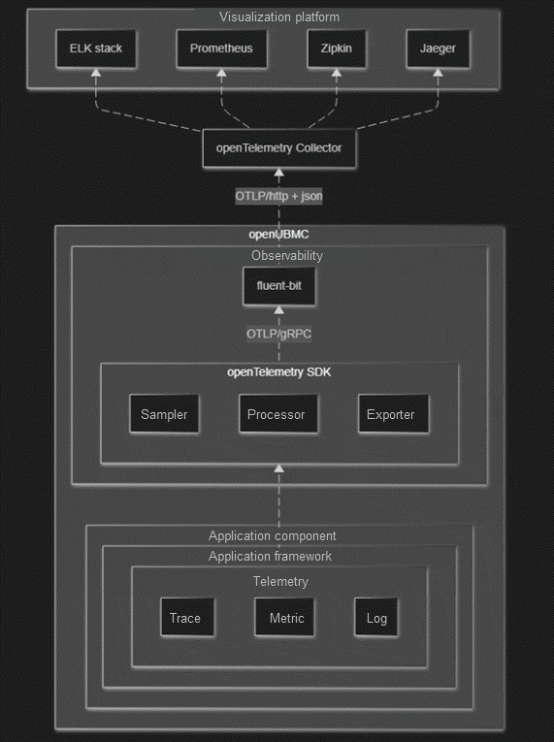
openUBMC uses openTelemetry to implement unified collection and management of metrics, logs, and traces. All data, including hardware status, system performance, and software status, is integrated and reported to openUBMC to ensure data integrity and consistency.
- Standard programming APIs
openUBMC encapsulates and provides application programming interfaces (APIs) based on openTelemetry to simplify data collection. Developers can easily integrate telemetry data into the BMC system through simple API calls. - Standard data formats
The unified telemetry framework defines compatible and consistent formats for metrics, logs, and traces, facilitating subsequent data processing and analysis. - Standard transmission protocols
openTelemetry Protocol (OTLP) is used, supporting both gRPC and HTTP/JSON. gRPC is applicable to high-performance scenarios for efficient data transfer. HTTP/JSON provides wide compatibility, facilitating integration with existing systems and tools.
2. Seamless Integration with Mainstream Tools
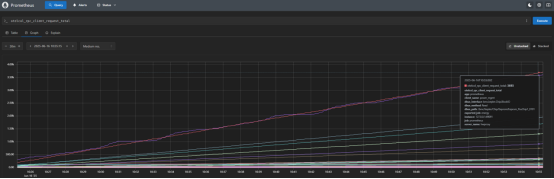
openTelemetry Collector allows openUBMC Observability to seamlessly integrate with tools such as Prometheus, Zipkin, Jaeger, and Elasticsearch, Logstash, and Kibana (ELK). In this way, powerful data visualization and analysis capabilities are provided to help users better understand and optimize system performance.
- Data collection and processing openTelemetry Collector supports multiple data formats and protocols, and can flexibly process telemetry data (metrics, logs, and traces) from various data sources.
- Data conversion and export openTelemetry Collector can convert collected data and export it to different target systems, such as Prometheus, Grafana, and Jaeger. This enables the observability data from the BMC to be simultaneously used by multiple tools, thereby improving data utilization.
3. Powerful Distributed Tracing Capability
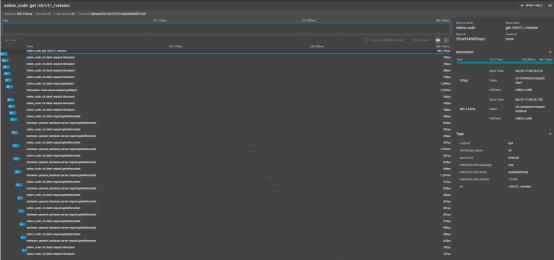
With the visualized analysis capability of platforms such as Zipkin, openUBMC can clearly display the complete call paths. Developers can easily trace every operation from hardware to software, and thus quickly locate performance bottlenecks and faults.
4. High Scalability and Flexibility
openUBMC provides APIs to support highly scalable observability. Developers can customize data collection and processing logic as required to meet observation requirements in different scenarios.
Value
Data-driven benefits: By monitoring the hardware and software status in real time, openUBMC aggregates and analyzes data to accurately identify performance bottlenecks and potential risks. With targeted data collection, it identifies and locates anomalies early in the development phase, effectively preventing failures and enhancing overall system stability and reliability.
During fault locating, clear call traces and accurate performance data enable developers to quickly define the fault scope, accurately trace the root cause, and significantly shorten the fault rectification time. The following issues were identified using the observability component during the R&D of the 25.06 version:
- Flash log flooding
By monitoring the flash write volume and analyzing its growth trend, openUBMC detected and prevented flash lifespan degradation caused by excessive writes.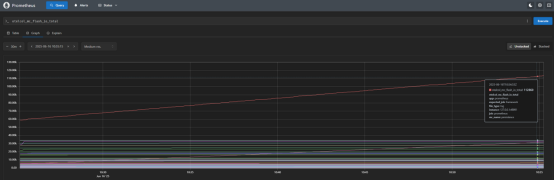
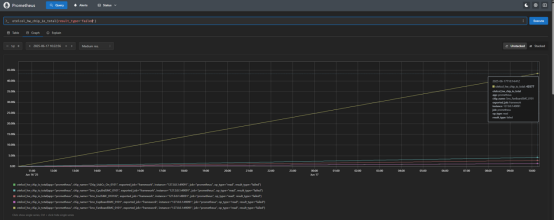
- Hardware access failure
By monitoring hardware access metrics and filtering access errors, openUBMC detected and prevented faulty hardware through the error growth trend analysis.
- Improper CSR configuration
By monitoring hardware access metrics and analyzing the collected data, openUBMC detected and prevented improper or invalid device access configurations in the CSR, optimizing hardware access cycles and improving overall BMC performance.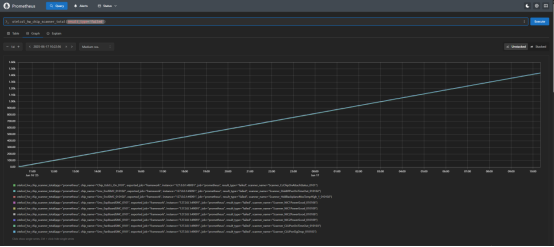
Prospects: Jointly Building openUBMC Observability
openUBMC Observability is open and extensible. We welcome more developers and community partners to join us in improving and optimizing the capability. Looking ahead, we will continue focusing our efforts on the following key areas:
- Enhance deep integration of hardware and software.
Deepen the collaborative observability between hardware and software to provide a more comprehensive device management perspective. - Introduce AI-driven anomaly detection.
Use AI technologies to intelligently analyze observed data and detect potential issues in advance. - Building a developer-friendly tool chain
Provide more easy-to-use tools and plug-ins to lower the barrier for developers to use openUBMC Observability. - Promoting community co-construction
Work with community developers to improve openUBMC Observability through technical sharing and open source contributions.
Summary
Full Insight into the System for a New BMC Vision
openUBMC Observability is built based on openTelemetry. It not only improves system stability and performance, but also provides developers with an efficient and flexible platform for development and observation. We believe that through the joint efforts of the community and partners, openUBMC Observability will become more comprehensive and deliver more benefits to developers and users.
If you are interested in openUBMC Observability, we warmly invite you to join our community. Let's explore and build a smarter, more reliable BMC system.
Join Us to Build openUBMC Observability
You are welcome to share your ideas and questions through the community forum, submit issues, or join Interface SIG regular meetings.
GitCode repository: https://gitcode.com/openUBMC/observability
Community forum: https://discuss.openubmc.cn
【版权声明】Copyright © 2026 openUBMC Community。本文由openUBMC社区首发,欢迎遵照CC-BY-SA 4.0协议规定转载。转载时敬请在正文注明并保留原文链接和作者信息。
【免责声明】本文仅代表作者本人观点,与本网站无关。本网站对文中陈述、观点判断保持中立,不对所包含内容的准确性、可靠性或完整性提供任何明示或暗示的保证。本文仅供读者参考,由此产生的所有法律责任均由读者本人承担。